


[ad_1]
Again in 1948, Well-liked Science described plywood, slightly unappealingly, as “a layer cake of lumber and glue.” However over the many years this cheap engineered wooden product has proved invaluable, not only for constructing easy constructions but additionally for permitting inside and furnishings designers alike to unleash their creativity.
Whereas plywood has historically been utilized in unfinished areas and constructing websites, in recent times designers have embraced its minimalist look in completed initiatives. Once we lately requested Swedish architect Björn Förstberg what he loves about plywood (he, along with his agency Förstberg Ling, has lined whole areas in plywood panels to beautiful impact; see his Pinterest-famous Home for Mom mission), he waxed poetic: “It has this very natural and heat high quality that makes an area really feel cozy and welcoming.” However what varieties are greatest to make use of the place, and what do the letter designations imply? Are there any downsides to overlaying your room in plywood? Learn on for our cheat sheet.

How is plywood made?
To create a sheet of plywood, a machine laminates skinny layers of wooden veneer collectively beneath warmth and strain. The grain of every layer is positioned at proper angles to the earlier layer, which provides this materials its unusual energy and sturdiness. (Take a look at this Love Letter to Plywood in video type for rather more element.)
Don’t confuse plywood with different engineered woods like particleboard, MDF (medium-density fiberboard), or OSB (oriented strand board). Product of wooden fibers or scraps bonded beneath excessive strain, they’re cheaper than plywood and never as sturdy.

What are the various kinds of plywood?
Plywood is available in many grades, sizes, and thicknesses. Right here’s a fast rundown.
Sorts
You might need heard of various sorts of plywood. A couple of frequent varieties are exterior plywood, which implies that it has been handled to withstand water and inclement climate; marine plywood, nice if you happen to’re constructing a ship (or one thing that’ll be uncovered to a number of moisture, like the within a WC); tropical plywood, normally of top of the range and made abroad; and low-grade structural plywood, typically used to construct concrete types on constructing websites. Hardwood plywood (typically referred to as cabinet-grade plywood) has a softwood core, however the veneer on the face is a wooden corresponding to ash, beech, mahogany, or walnut.
Plies
Most plywood is both three-ply—that’s, product of three layers of wooden—or five-ply. There’s additionally multi-ply, which is used for heavy building corresponding to homes.

What are the totally different grades of plywood?
Plywood is mostly given one in all 4 grades that signifies its high quality when it comes to knots, discoloration, defects, and repaired patches. When you’ve puzzled what the letters imply in your piece of plywood, it’s referring to the grade.
A Grade: A-grade plywood is premium high quality plywood, with no knots and a clean, sanded floor that’s able to be completed.
B Grade: B grade can also be sanded, however may have some knots and repairs.
C Grade: C-grade plywood is unsanded and has extra “defects” than A or B grades.
D Grade: D grade goes to the least costly plywood. Due to its markings, this could be a great kind of plywood to color over (although others would possibly discover this interesting).
Grades with two letters: Plywood panels normally carry two letter grades, for a easy cause: One letter refers back to the grade of wooden on the face of the sheet, the opposite to the wooden on the again, most often an inferior grade. It’s doable to get plywood with either side of the identical grade.
X: An “X” on the finish of the designation means the panel is nice for exterior use.
FSC: FSC is brief for “Forest Stewardship Council,” and certifies that the plywood comes from responsibly managed forests.
What grade is greatest for my mission?
Any hardwood plywood is appropriate for nice woodworking initiatives corresponding to constructing furnishings and cupboards. Equally, sanded softwood plywood—Grade A or B—will work for a similar functions. These putting in uncovered plywood panels on inside partitions, just like the Förstberg Ling architects, may additionally select this grade, paying cautious consideration to the grain. Grade C or D plywood is suited to initiatives corresponding to subflooring and for structural use.
What sorts of wooden are used to make plywood?
Softwood plywood is product of woods corresponding to pine, cedar, Douglas fir, or spruce. The face veneer is mostly a greater grade of wooden than the opposite layers; for instance, hardwood plywood has a softwood core lined with a hardwood veneer like ash, mahogany, beech, or walnut.
What sizes does plywood are available?
Plywood panels are available a variety of sizes, however are most frequently 4 toes throughout. The size can vary from eight to 10 toes; two-by-four-foot items are additionally accessible for smaller initiatives. However watch out when measuring because the acknowledged dimensions all the time fall slightly wanting these numbers.
Plywood additionally is available in many thicknesses. The most typical sheet widths are ¼ inch, ½ inch, and ¾ inch, although thicker and thinner widths do exist. Once more, these given dimensions are typically barely bigger than the precise sheet; for example, ½ inch ought to actually be labeled 15/32 inch.

What are some great benefits of plywood?
“Architects have all the time been taken with plywood,” says Björn Förstberg, “however it could be extra common with most people now than it’s ever been.” And for good cause, because the pluses are many: This cheap wooden doesn’t have the shortcomings of lumber because it received’t warp, shrink, or develop. It’s a lot utilized in home constructing but additionally a favourite with hobbyists and residential woodworkers. And even though it’s comparatively economical (extra on that later), it’s extremely sturdy and sturdy.
What are the disadvantages?
Many individuals think about the unfinished edges of plywood panels to be unpleasant. If the sides are uncovered, chances are you’ll wish to end them by portray or ending with laminate edge banding.
One other downside is that plywood may be troublesome to chop, in comparison with strong wooden, and is liable to splintering on the edges when the face veneer is very skinny (typically the case with hardwood plywoods). When you’re engaged on a mission, watch out with sanding, as a skinny veneer can undergo from vigorous sanding, as you would possibly sand by way of to the subsequent layer.
There’s additionally the potential for noxious gases from the adhesives utilized in making plywood; extra on that under.

Is plywood protected?
Since plywood is handled wooden, it’s smart to keep away from inhaling mud while you’re slicing it. Put on a mud masks and, if doable, do your sawing open air. Indoor plywood made with urea-formaldehyde glue could cause well being issues because of off-gassing from the wooden. However latest years have introduced new authorities requirements for formaldehyde emissions, and a few indoor plywood is now being made formaldehyde-free. For rather more on this, see our submit Reworking 101: Is Plywood Secure?.
How a lot does plywood value?
In fact, the costs range relying on the grade, measurement, and thickness. To supply a number of examples: ¼-inch-thick, four-by-eight-foot BC-Grade Sanded Pine Plywood sells for $19.77 per panel at Residence Depot, whereas a 3/4-inch-thick PureBond Crimson Oak Plywood panel of the identical measurement, made with a formaldehyde-free glue, sells for $54.98. Store round for the grade, thickness, and pricing that works for you; Residence Depot and different lumber and constructing provide corporations will promote an virtually countless quantity of choices.

Do I have to match the colour and grain?
Totally different procedures are used to create the patterns and grains you see within the veneer on any plywood panel. Generally the veneer is a complete piece, taken from a single minimize. At different occasions the sheets of veneer have been joined in a means that offers a constant or pleasing sample within the grain and matches the colours. Costs range in line with the strategy used and the ensuing look. If the grain of the wooden might be seen in your finish product, that’s a great cause to decide on your individual plywood slightly than ordering it sight unseen. However Förstberg says the grains and markings are a part of the enchantment: “The pure never-repeating patterns are laborious to get uninterested in. Plywood is sort of a nice marble; nature does it greatest.”
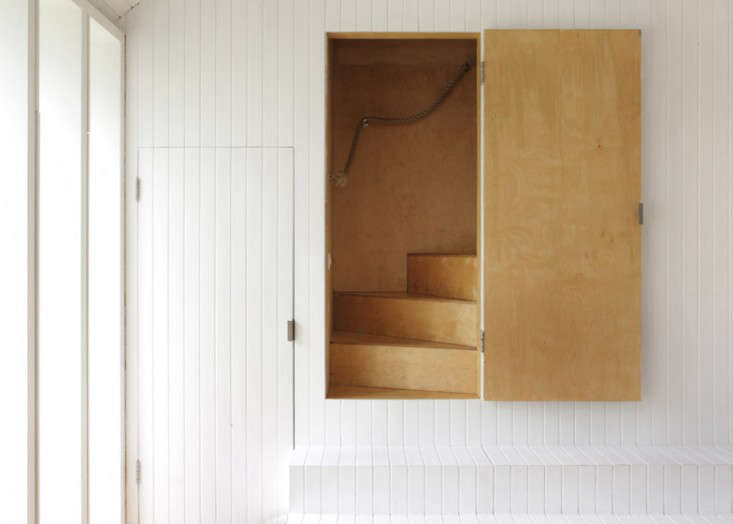
N.B.: The featured picture is from A Value-Acutely aware Home in Sweden That’s a Pinterest Sensation.
Extra on the flexibility of plywood:
[ad_2]
Source link
